Skip to content
Amara.org

Amara.org

Advancing Media Accessibility and Audiovisual Translation

  • Services
    • Audio & Video Transcription
    • Captioning
    • Subtitle Translation & Localization
    • Text Translation & Localization
  • Subtitle Editor Solutions
    • Amara Personal Orders Workspace
    • Amara Plus
    • Amara Enterprise
      • Pay-Per-Use
      • Pay-Per-Seat
    • Amara Editor Integration
  • Industries
    • Education and eLearning
    • Film, Television, and Entertainment
    • Government and Public Services
    • Museums and Cultural Institutions
    • News and Journalism
    • Nonprofits
    • Religious and Faith-Based
    • Corporate
  • Resources
    • Accessibility Statement
    • Languages Supported
    • Announcements
    • Features and Developments
    • Start Volunteering
  • Amplifying Voices
    • Become a Volunteer
    • Content Partners
      • Association of African Universities (AAU)
      • All Out
      • CIVIX
    • Projects
      • Accessibility and Inclusion
      • Black History
      • Civic Participation and Democracy
      • COVID-19 Pandemic
      • Diversity and Equality
      • Endangered Languages
      • Environment and Climate Change
      • Gender Diversity
      • Greenwashing
      • Human Trafficking
      • Hunger
      • Indigenous Peoples’ Rights
      • Mental Health
      • Misinformation and Disinformation
      • Musical Education
      • Neurodiversity
      • Ocean Protection
      • Promoting Girls Education
      • Promotion of Literacy Worldwide
      • Recycling and Upcycling
      • Refugee Crisis and Solutions
      • Rewilding
      • Sexual Diversity
      • Sustainable Societies
      • Wildfires
      • Wildlife Protection
  • Categories
    • Artículos en español
    • Artigos em português
    • Articles en français
    • Guest Posts
    • Partners
    • Team Member Spotlight
    • Amara On Demand
    • Amara Enterprise Platform
    • Volunteering
    • Accessibility and Captioning
    • Audio and Video Transcription
    • Captions and Subtitles
    • Culture and Appreciation
    • Language Diversity Preservation
    • Solutions and Tools
    • Subtitling and Global Reach
    • Technology and Work
    • Transcreation and Cultural Adaptation
    • Translation and Localization
    • Corporate
    • Digital Video Creators
    • Film and Television
    • Nonprofits
    • Podcast
  • Toggle search form
Rectangular image with a white background. There's an illustration of a podcaster on the right side, and the title of the article is on the left side. The title reads: Verbatim vs. Non-Verbatim: Which Podcast Transcription Style Is Right for You?

Verbatim vs. Non-Verbatim: Which Podcast Transcription Style Is Right for You?

Posted on February 6, 2025February 25, 2025 By amarasubs No Comments on Verbatim vs. Non-Verbatim: Which Podcast Transcription Style Is Right for You?

Transcribing your podcast is one of the most effective ways to expand its reach, enhance accessibility, and improve discoverability. However, the decision to opt for a verbatim or non-verbatim transcription can be challenging. Each approach has unique strengths that depend on your goals, audience, and intended use of the transcription.

What Is a Verbatim Transcription?

A verbatim transcription captures every word and sound from your podcast, including filler words (e.g., “um,” “uh,” “like”), pauses, and non-verbal cues like laughter or sighs. It mirrors the spoken dialogue exactly as it occurs.

What Is a Non-Verbatim Transcription?

A non-verbatim transcription streamlines the content by removing filler words, correcting grammatical errors, and occasionally rephrasing sentences for clarity while preserving the original meaning.

What are the Advantages and Disadvantages of Verbatim and Non-Verbatim Transcriptions?

Verbatim Transcription

Advantages:

  1. Authenticity: Captures the speaker’s tone, personality, and intent.
  2. Detailed Analysis: Useful for legal, academic, or research purposes where every word matters.
  3. Accessibility: Provides a complete picture for those who prefer consuming content exactly as spoken.

Disadvantages:

  1. Cluttered Readability: May be difficult to read due to filler words and interruptions.
  2. Time-Consuming to Process: Requires more time for editing or reviewing.
  3. Higher Cost: Often more expensive due to the detailed effort involved.

Impact on Translation:

  • Pro: Offers context and nuances valuable for accurate translation.
  • Con: Translators may spend extra time cleaning up filler content, increasing overall translation costs.

Non-Verbatim Transcription

Advantages:

  1. Improved Readability: Provides a clean and polished text that’s easier to follow.
  2. Professional Appeal: Suitable for marketing, blogs, and other written formats.
  3. Cost-Effective: Requires less effort and is generally more affordable.

Disadvantages:

  1. Loss of Detail: Omitting fillers and subtle nuances may alter the speaker’s tone or intent.
  2. Limited Use for Analysis: May not meet the needs of industries that demand precise transcripts.

Impact on Translation:

  • Pro: Streamlined content simplifies the translation process, potentially lowering costs.
  • Con: Lack of certain contextual elements could lead to less nuanced translations.

Should I choose Verbatim or Non-Verbatim Transcription for my podcast?

Your choice depends on your podcast’s purpose and audience. If you want to capture every element of the conversation for legal, research, or detailed analysis, a verbatim transcription is your best bet. However, if you aim for accessibility, readability, and a more polished output for broader distribution or translation, a non-verbatim transcription is the ideal choice.

Ultimately, balancing your content’s authenticity and readability will ensure that your transcription aligns with your goals, making your audio or video content more impactful for your audience.

For professional transcription services tailored to your podcast, reach out to us at client-services@amara.org. Our team is ready to help you find the perfect transcription solution to meet your needs. We look forward to assisting you!
Read these articles next

Audio and Video Transcription, Podcast Tags:non-verbatim, podcast, podcast-transcription, transcription, verbatim

Post navigation

Previous Post: Beyond Words: How Human Translators Capture Nuance and Context Better Than AI
Next Post: Subtitling vs. Dubbing: Which Is Better for Globalizing Your Content and Reaching a Wider Audience?

More articles to learn from

Rectangular image highlighting the article title, "International Day of the World’s Indigenous Peoples: How Captions and Subtitles Help Preserve Indigenous Languages”. At the center, an illustration of two happy people communicating through speech bubbles containing a globe. Amara logo at the bottom. International Day of the World’s Indigenous Peoples: How Captions and Subtitles Help Preserve Indigenous Languages Audio and Video Transcription
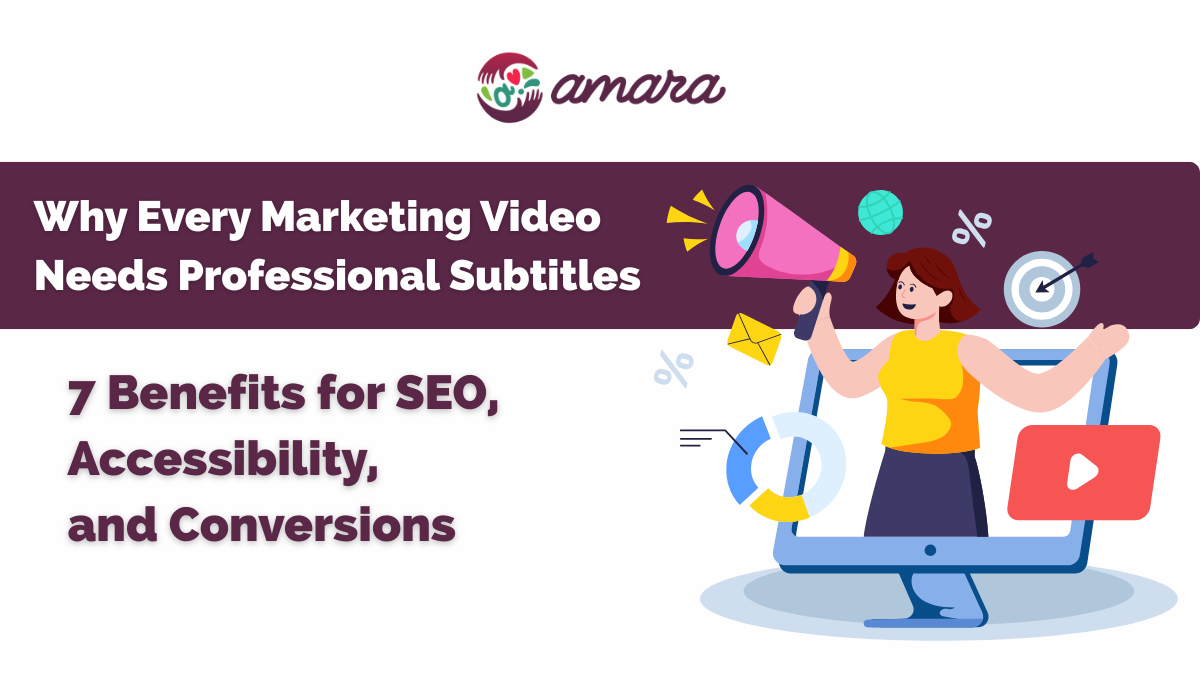
Rectangular image. The Amara logo appears at the top above the headline, "Why Every Marketing Video Needs Professional Subtitles." Below, large text reads, "7 Benefits for SEO, Accessibility, and Conversions." On the right, a colorful illustration shows a woman speaking through a megaphone while standing inside a computer monitor, surrounded by marketing icons including a target, percentage symbols, a pie chart, an envelope, and a video play button. Why Every Marketing Video Needs Professional Subtitles: 7 Benefits for SEO, Accessibility, and Conversions Accessibility and Captioning
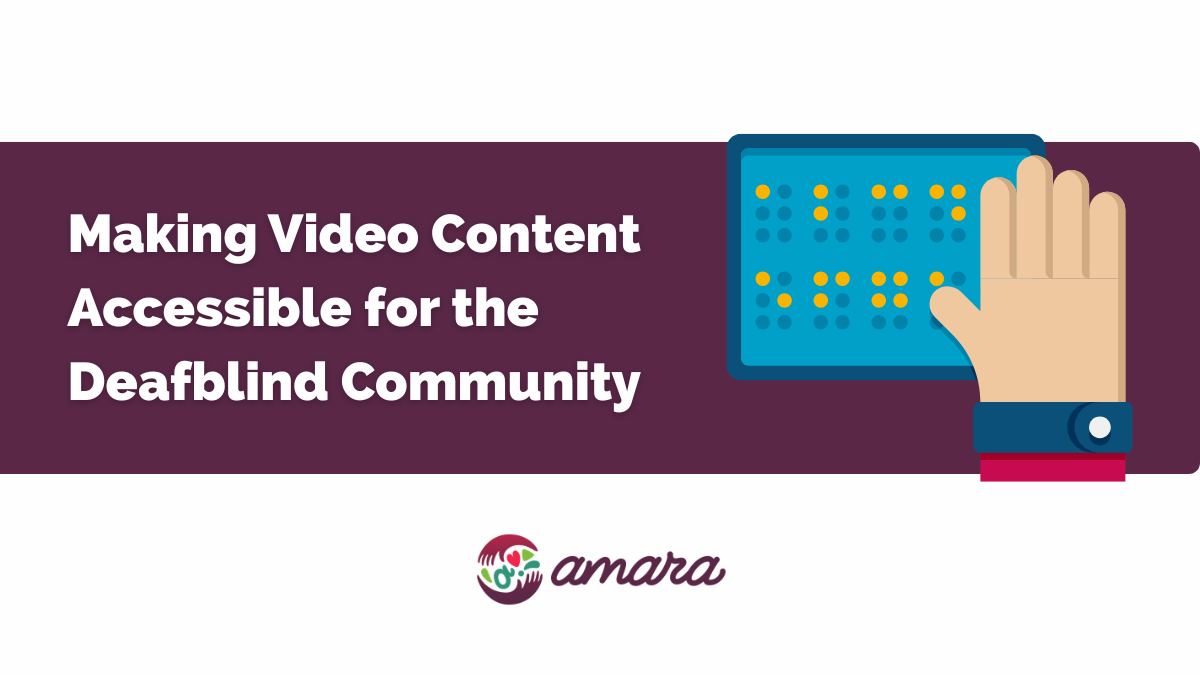
Rectangular image with the title of the artcle to the left, it reads "Making Video Content Accessible for the Deafblind Community". To the right, an illustration shows a hand reading a blue Braille display with raised dots. At the bottom-center, we have the Amara logo. Beyond Captions: Making Video Content Accessible for the Deafblind Community Accessibility and Captioning
Rectangular image with the title of the article at the bottom-center. “How Subtitles and Captions Help Refugees Access Information and Build New Lives.” Above it, there's an illustration of a group of refugee silhouettes walking in a line, including adults and children carrying bags, belongings, and luggage. Amara logo at the top-right corner. World Refugee Day: How Subtitles and Captions Help Refugees Access Information and Build New Lives Accessibility and Captioning
Rectangular image. On the left, a black-and-white illustration features overlapping Cyrillic letters in various sizes and styles. On the right, the text reads: “Celebrating Cyrillic Alphabet Day” in green, followed by “Why Scripts, Subtitles, and Language Diversity Matter” in dark purple. The Amara logo is in the bottom-right corner. Celebrating Cyrillic Alphabet Day: Why Scripts, Subtitles, and Language Diversity Matter Audio and Video Transcription
Graphic with a purple header reading “International Mother Language Day.” On the right, large text asks, “How Can Captions and Subtitles Support Linguistic Diversity?” On the left, an illustration shows three diverse people smiling and talking together. Two speech bubbles above them contain a Chinese character and the letter “A.” The Amara logo appears in the bottom right corner. International Mother Language Day: How Can Captions and Subtitles Support Linguistic Diversity? Accessibility and Captioning

Leave a Reply Cancel reply

Your email address will not be published. Required fields are marked *

Give us a follow:

  • Bluesky
  • Facebook
  • Instagram
  • LinkedIn
  • YouTube

Contact us at enterprise@amara.org

Powered by PressBook Grid Blogs theme