International Day of Deafblindness and the Power of Descriptive Transcripts
On June 27, the world observes the International Day of Deafblindness, a global observance established by the United Nations in 2025. The date commemorates the birthday of pioneering author, educator, and disability advocate Helen Keller, one of the most recognized members of the deafblind community. The day was created to raise awareness of deafblindness as a distinct disability and to promote the rights, inclusion, and visibility of people who live with combined vision and hearing loss.
Recognizing deafblindness as its own disability is important. People who are deafblind face unique challenges that differ from those experienced by individuals who are solely deaf or solely blind. Because neither hearing nor vision can fully compensate for the loss of the other senses, accessibility solutions must be specifically designed for their communication and information needs. The United Nations explicitly recognizes deafblindness as a distinct disability requiring specialized support, services, and inclusion efforts.
As more of the world’s information, education, entertainment, and public services move to video, ensuring access for the deafblind community has become increasingly important.
Why Captions Alone Are Not Enough
Captions play a critical role in making video accessible for people who are deaf or hard of hearing. Audio description helps people who are blind or have low vision understand important visual information.
However, individuals who are deafblind often require another accessibility format: descriptive transcripts.
A descriptive transcript combines the information typically found in captions and audio descriptions into a single text document. It includes:
- Spoken dialogue
- Speaker identification
- Relevant sounds and audio cues
- Important visual actions
- On-screen text
- Scene changes
- Context necessary to understand the full content
Unlike captions or audio descriptions that are consumed during video playback, descriptive transcripts provide a complete text-based representation of the video experience.
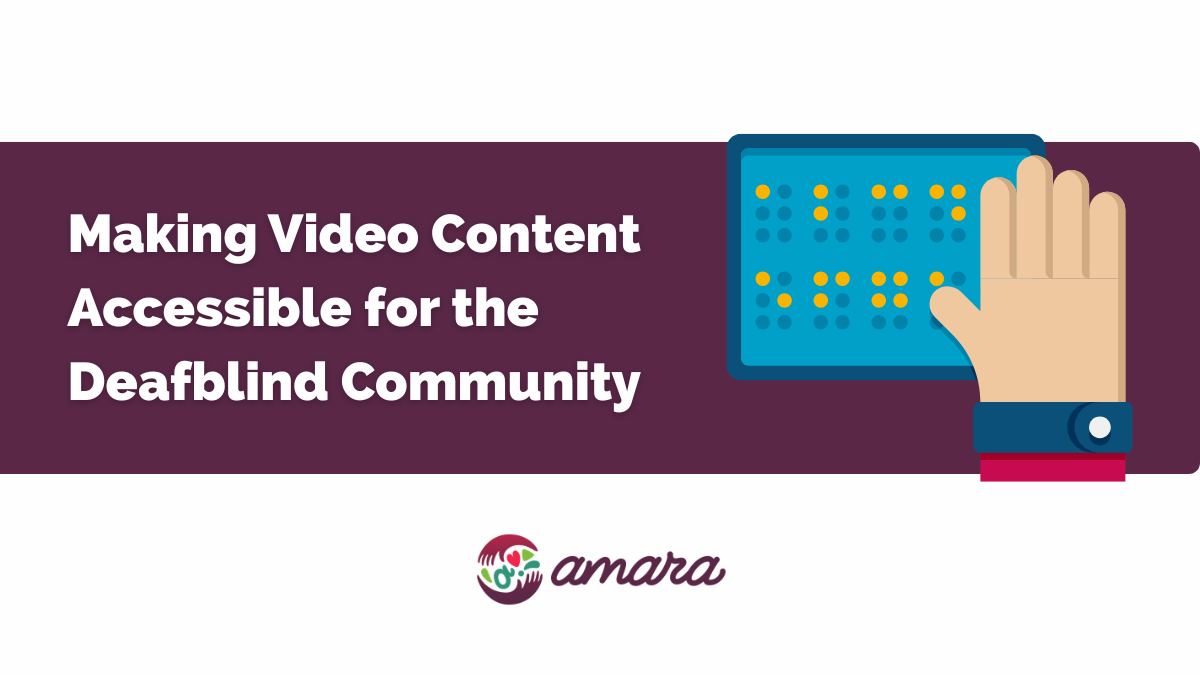
This format is particularly valuable because it can be accessed through refreshable or interactive Braille displays, allowing people who are deafblind to independently navigate and consume video content through touch.
What Is Interactive Braille?
Interactive Braille technology, often delivered through refreshable Braille displays, converts digital text into tactile Braille characters that can be read line by line through touch. Users connect these devices to computers, smartphones, or other digital platforms to access information that would otherwise be presented visually or through audio.
When a video is accompanied by a high-quality descriptive transcript, a deafblind user can read the transcript through a Braille display and gain access to both the spoken and visual elements of the content.
This approach transforms video from an inaccessible medium into one that can provide information, education, entertainment, and participation in meaningful conversations.
The World Wide Web Consortium (W3C) and accessibility experts recommend descriptive transcripts as an important accessibility solution for multimedia content because they provide a comprehensive text alternative that includes both audio and visual information.
The Human Element Matters
As AI-generated captions, transcripts, and audio descriptions become increasingly common, it can be tempting to rely entirely on automated solutions. While AI can help accelerate accessibility workflows, descriptive transcripts for the deafblind community require a level of judgment, context, and accessibility expertise that automation alone often cannot provide.
Creating a truly useful descriptive transcript involves making decisions about:
- Which visual details are essential for understanding
- How to describe actions and emotions clearly
- How much context to include
- How to structure information for readability through Braille devices
- How to ensure synchronization between audio and visual information
Professional accessibility specialists, captioners, and audio description experts understand these nuances. They can identify information that automated systems may miss, misinterpret, or describe inadequately.
For organizations committed to meaningful accessibility, human review remains a critical part of creating descriptive transcripts that genuinely serve the deafblind community.
Access to Information Is a Fundamental Right
For many people, video has become the primary way to learn, communicate, and engage with the world.
Educational institutions deliver lessons through video. Governments share public information through video announcements. Nonprofits publish awareness campaigns. Businesses train employees through video courses. Creators entertain millions through streaming platforms and social media.
Without accessible alternatives, members of the deafblind community can be excluded from these experiences and opportunities.
Descriptive transcripts help bridge that gap by making it possible for deafblind individuals to:
- Access educational content
- Stay informed about current events
- Participate in workplace training
- Enjoy entertainment and cultural media
- Access public service information
- Engage with online communities
Accessibility is not simply a technical requirement. It is a way of ensuring equal access to information, participation, and opportunity.
Building a More Accessible Future
As we recognize International Day of Deafblindness, it is an opportunity for content creators, educators, organizations, and businesses to consider whether their video content is truly accessible to all audiences.
Captions are an essential first step. Audio description expands accessibility further. Descriptive transcripts help ensure that people who are deafblind are not left behind.
At Amara.org, we believe that everyone deserves access to information and communication. Our professional subtitling and accessibility services help organizations create high-quality captions, subtitles, audio description workflows, and descriptive transcripts that reach broader audiences and support digital inclusion.
If you are creating video content and want to make it accessible to the deafblind community, contact Amara.org to learn how our team of accessibility professionals can help you create descriptive transcripts and other accessibility solutions that go beyond compliance and truly expand access.
This International Day of Deafblindness, let’s work toward a digital world where information is accessible to everyone—regardless of how they see, hear, or experience media. Reach out to client-services@amara.org to inquire more about our media accessibility tools, services, and solutions.
Additional Resources
- United Nations International Day of Deafblindness: https://www.un.org/en/observances/deafblindness-day
- World Federation of the Deafblind (WFDB): https://wfdb.eu/international-day-of-deafblindness
- Deafblindness Awareness Video Playlist: https://www.youtube.com/playlist?list=PLCIqNAZdei8lpC3Cg9MPEPpOOhItGIIev
- W3C Guidance on Descriptive Transcripts: https://www.w3.org/WAI/media/av/transcripts/#example-descriptive-transcript-from-caption-files
- Descriptive Transcript Best Practices: https://dequeuniversity.com/tips/text-transcript