Skip to content
Amara Accessibility Media

Amara Accessibility Media

Building access to global information through transcripts, captions, and subtitles

  • Categories
    • Accessibility and Captioning
    • Audio and Video Transcription
    • Captions and Subtitles
    • Culture and Appreciation
    • Language Diversity Preservation
    • Solutions and Tools
    • Subtitling and Global Reach
    • Technology and Work
    • Transcreation and Cultural Adaptation
    • Translation and Localization
    • Volunteering
    • Amara On Demand
    • Amara Enterprise Platform
    • Artículos en español
    • Artigos em português
    • Articles en français
  • Industries
    • Arts
    • Corporate
    • Digital Video Creators
    • Education
    • Film and Television
    • News
    • Nonprofits
    • Podcast
  • Professional Services
    • Audio and Video Transcription
    • Professional Captions
    • Subtitle Translation
    • AI Captions
    • AI Subtitles
    • Text Translation
  • Platform Solutions
    • Amara Public (Free)
    • Amara Plus
    • Amara Enterprise
    • Amara Editor Integration
  • Amplifying Voices
    • Become a Volunteer
    • Content Partners
      • Association of African Universities (AAU)
      • All Out
      • CIVIX
    • Projects
      • Accessibility and Inclusion
      • Black History
      • Civic Participation and Democracy
      • COVID-19 Pandemic
      • Diversity and Equality
      • Endangered Languages
      • Environment and Climate Change
      • Gender Diversity
      • Greenwashing
      • Human Trafficking
      • Hunger
      • Indigenous Peoples’ Rights
      • Mental Health
      • Misinformation and Disinformation
      • Musical Education
      • Neurodiversity
      • Ocean Protection
      • Promoting Girls Education
      • Promotion of Literacy Worldwide
      • Recycling and Upcycling
      • Refugee Crisis and Solutions
      • Rewilding
      • Sexual Diversity
      • Sustainable Societies
      • Wildfires
      • Wildlife Protection
  • Updates
    • Amara Announcements
    • Features and Developments
    • Amara Partners
    • Amara Team Guest Posts
    • Amara Team Member Spotlight
    • Volunteer
  • Toggle search form
Spotlight over a starry sky illustration with text "Language Spotlight: Aymara" with Amara logo in the corner.

Language Spotlight: Aymara

Posted on November 14, 2022November 14, 2022 By allison No Comments on Language Spotlight: Aymara

Every once in a while, we like to highlight the languages supported on Amara. New languages can be requested by emailing our support team at support@amara.org and telling them the language name, typing direction, and ISO language code if you have it! Our mission is to make content accessible across language barriers. The more languages we support, the more media barriers we can cross!

Supported on Amara: the Aymara language

This week, we would like to take the chance to talk about the Aymara language. Aymara has over 2 million speakers along the Andes mountains. It is primarily spoken in Bolivia, but there are also many speakers in Peru and Chile. 

The name “Aymara” also refers to a group of people. The Aymara, or Aimara, people live in northwest Argentina, Bolivia, Chile and Peru. Their ancestors lived in that region for many centuries, dating back to before the Incan empire. Many Aymara people speak Spanish as a second language.

Hear Aymara as it is spoken today!

What is the writing system for Aymara?

The most common writing system for Aymara uses the Roman alphabet (a,b,c…). But in 2015, researchers adapted the Korean alphabet (Hangeul) for use with the Aymara language. So far, it’s less commonly used than the older Romanized version. But it must be an interesting challenge to try out a new writing system in the same language, as a speaker or a language researcher!

What is agglutination in Aymara?

The Aymara language has many interesting features that sets it apart including its people, culture, and history in the Andes region. And we like to celebrate differences here as well as similarities! One feature that the Aymara language has in common with other languages is agglutination. Agglutination is the combining of parts of a word to make a longer, more meaningful word than before. It’s a common feature in a diverse range of language families. Finnish, Japanese, and Turkish all have examples of agglutination in their vocabulary, just to name a few! It’s interesting to see people all around the world try to solve the problem of communicating complex meaning and arrive at similar solutions sometimes! 

Let’s take an example from aymara.org:

Achachila (=Old man) 

jama (=seem)

taki (=for)

puni (=always)

wa (=affirmative)

Combined, we have the word “Achachiljamatakipuniwa” which intends to convey  the thought “It seems that, in any way, is for the Old man.”  

Thank you for taking some time out of your day to read a few things about Aymara. If you are a native speaker of Aymara, we encourage you to add, subtitle, or translate videos on the Amara platform. We have a free subtitling workspace or paid options for private teams. We also have volunteer opportunities for captioners and translators. If you are interested in making critical information available to your language community, consider joining the Amplifying Voices volunteer team. Our editorial team releases batches of videos that cover a diverse variety of critical information from medical information to recycling to human rights around the world. 

We are so grateful to be able to support so many languages around the world and give their speakers a platform to make their content more accessible!
Read these articles next

Culture and Appreciation, Mission

Post navigation

Previous Post: Localization as a gateway for cultural appreciation
Next Post: Best tools to translate video online

More articles to learn from

A rectangular image with the title of the article on the left-center, the title reads: Honoring Native Heritage: The Role of Captions in Preserving Indigenous Languages and Stories. And on the right-center, we have an illustration of a screen with the play button and subtitles. Honoring Native Heritage: The Role of Captions in Preserving Indigenous Languages and Stories Accessibility and Captioning
A rectangular image, with the article title. At the top, we have the text "Celebrating Indigenous Languages and Storytelling Through Video" with an illustration of a camera with a play button to the left side. And to the bottom of the image we have the text "Amara sponsors the Best Language Video category for the ICTV Video Awards!" with five gold stars. The logos for Amara and ICTV are at the bottom. Celebrating Indigenous Languages and Storytelling Through Video Amara Announcements
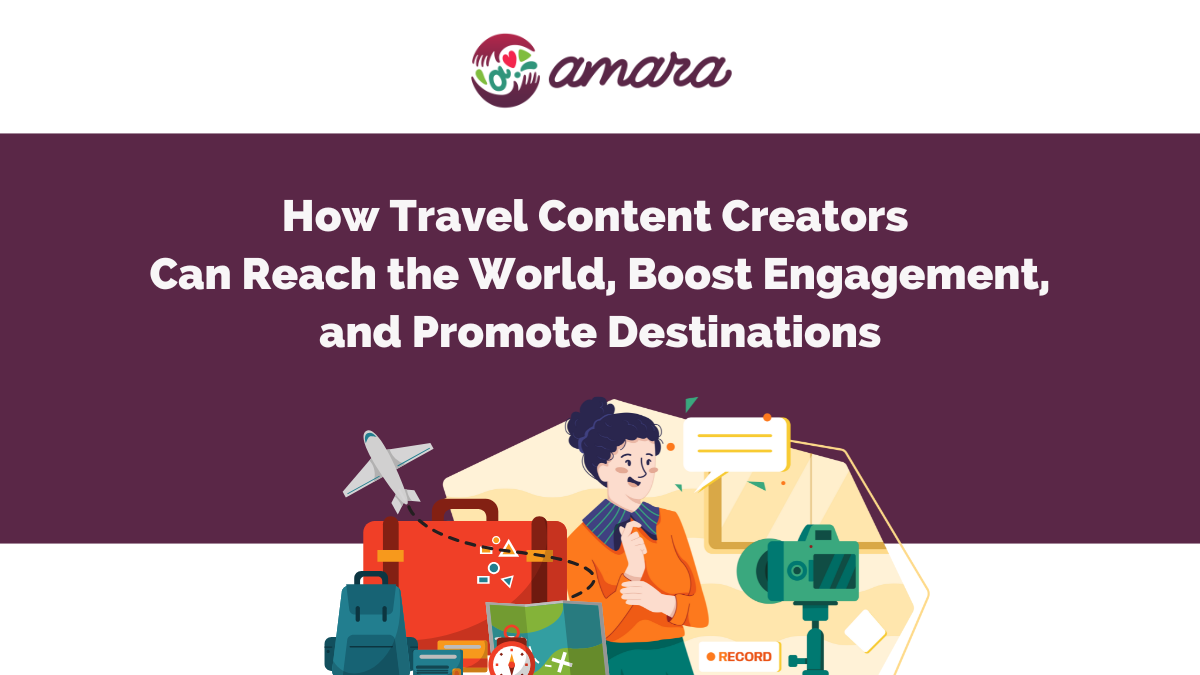
A rectangular image with part of the article title at the center, it reads: How Travel Content Creators Can Reach the World, Boost Engagement, and Promote Destinations. There's also an illustration of a travel content creator on the bottom-center of the image. The Power of Translated Subtitles: How Travel Content Creators Can Reach the World, Boost Engagement, and Promote Destinations Captions and Subtitles
A rectangular image, with the article title at the middle/center. There's also an illustration of Earth with hands coming up with microphones and various instruments to amplify voices. How to Preserve the Voices of the World: Key Initiatives for Endangered and Minority Languages Language Diversity Preservation
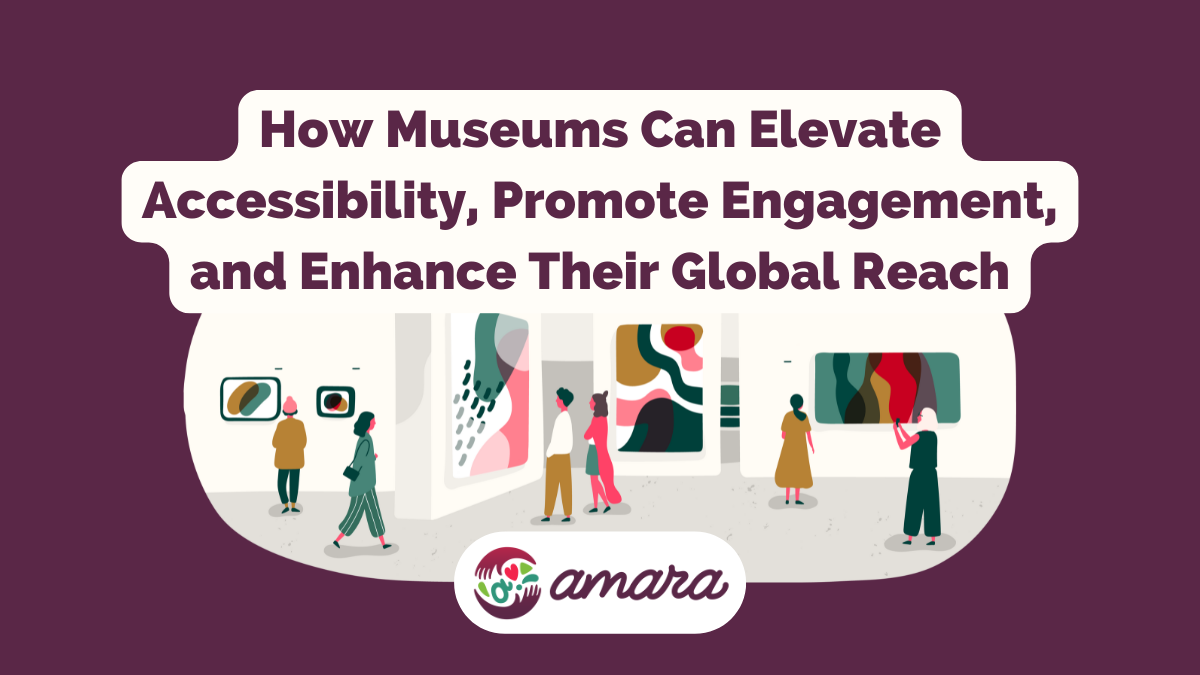
A rectangular image with e a "plum" colored background. The title of the article is at the center. There's an illustration of a museum below the title. How Museums Can Elevate Accessibility, Promote Engagement, and Enhance Their Global Reach Accessibility and Captioning
Rectangular image with a white background. The article title is at the center left and there's an illustration of 5 people touching a light bulb on the right side. Amara.org’s Mission: Preserving Cultures and Broadening Accessibility Accessibility and Captioning

Leave a Reply Cancel reply

Your email address will not be published. Required fields are marked *

Give us a follow

  • Facebook
  • Instagram
  • LinkedIn
  • Twitter
  • YouTube

Contact us at enterprise@amara.org

Powered by PressBook Grid Blogs theme