Skip to content
Amara.org

Amara.org

Advancing Media Accessibility and Audiovisual Translation

  • Categories
    • Accessibility and Captioning
    • Audio and Video Transcription
    • Captions and Subtitles
    • Culture and Appreciation
    • Language Diversity Preservation
    • Solutions and Tools
    • Subtitling and Global Reach
    • Technology and Work
    • Transcreation and Cultural Adaptation
    • Translation and Localization
    • Volunteering
    • Amara On Demand
    • Amara Enterprise Platform
    • Artículos en español
    • Artigos em português
    • Articles en français
  • Industries
    • Arts
    • Corporate
    • Digital Video Creators
    • Education
    • Film and Television
    • News
    • Nonprofits
    • Podcast
  • Professional Services
    • Audio and Video Transcription
    • Professional Captions
    • Subtitle Translation
    • AI Captions
    • AI Subtitles
    • Text Translation
  • Platform Solutions
    • Amara Orders Workspace
    • Amara Plus
    • Amara Enterprise
      • Pay-Per-Use
      • Pay-Per-Seat
    • Amara Editor Integration
  • Amplifying Voices
    • Become a Volunteer
    • Content Partners
      • Association of African Universities (AAU)
      • All Out
      • CIVIX
    • Projects
      • Accessibility and Inclusion
      • Black History
      • Civic Participation and Democracy
      • COVID-19 Pandemic
      • Diversity and Equality
      • Endangered Languages
      • Environment and Climate Change
      • Gender Diversity
      • Greenwashing
      • Human Trafficking
      • Hunger
      • Indigenous Peoples’ Rights
      • Mental Health
      • Misinformation and Disinformation
      • Musical Education
      • Neurodiversity
      • Ocean Protection
      • Promoting Girls Education
      • Promotion of Literacy Worldwide
      • Recycling and Upcycling
      • Refugee Crisis and Solutions
      • Rewilding
      • Sexual Diversity
      • Sustainable Societies
      • Wildfires
      • Wildlife Protection
  • Amara News
    • Announcements
    • Features and Developments
    • Languages Supported
    • Accessibility Statement
    • Start Volunteering
    • Partners
    • Guest Posts
    • Team Member Spotlight
  • Toggle search form

The Importance of Subtitling: Accessibility for All

Posted on April 24, 2018February 7, 2025 By amarasubs 4 Comments on The Importance of Subtitling: Accessibility for All

According to the American Press Institute, 85 percent of videos viewed on Facebook are watched without sound. This is often a choice for many users. But for others, this is a necessity in order to access the content.

For those who are deaf or hard of hearing, captions are the only way to enjoy, and benefit from, the video content that many of us take for granted.  Even for those able to lipread, a large chunk of video content features people speaking off camera, or sound overlay over images or other visuals.


466 Million people around the world are deaf or hard of hearing. This number is predicted to rise to 900 million by 2050.  


Currently, there is only one US law (Chapter 5 of Title III of the American Disabilities Act) that encourages captioning and subtitles for all audiovisual content online. Unfortunately, this law is only enforced on federally funded websites, leaving videos on the majority of sites that most people click through daily, up to the discretion of the creators of the video content.

Why should you care?

Subtitles are a Smart Business Decision

Current data shows that 85 percent of Facebook users are watching video content with no sound. This is a huge number of people and from only one site. It is not a far leap to assume that users view videos the same way on other sites. Therefore, if you want to have loads of people watching your content, you should caption and subtitle your video!

Subtitles are Proven to Enhance Learning

The majority of the world’s population are visual learners, at a whopping 65 percent.

For visual learners, video content is becoming an increasingly helpful educational tool for understanding concepts that they could not grasp in class with traditional teaching methods.

With the rise of online learning resources such as Udacity and Complexity Explorer, the Internet is becoming the best space for visual learners.

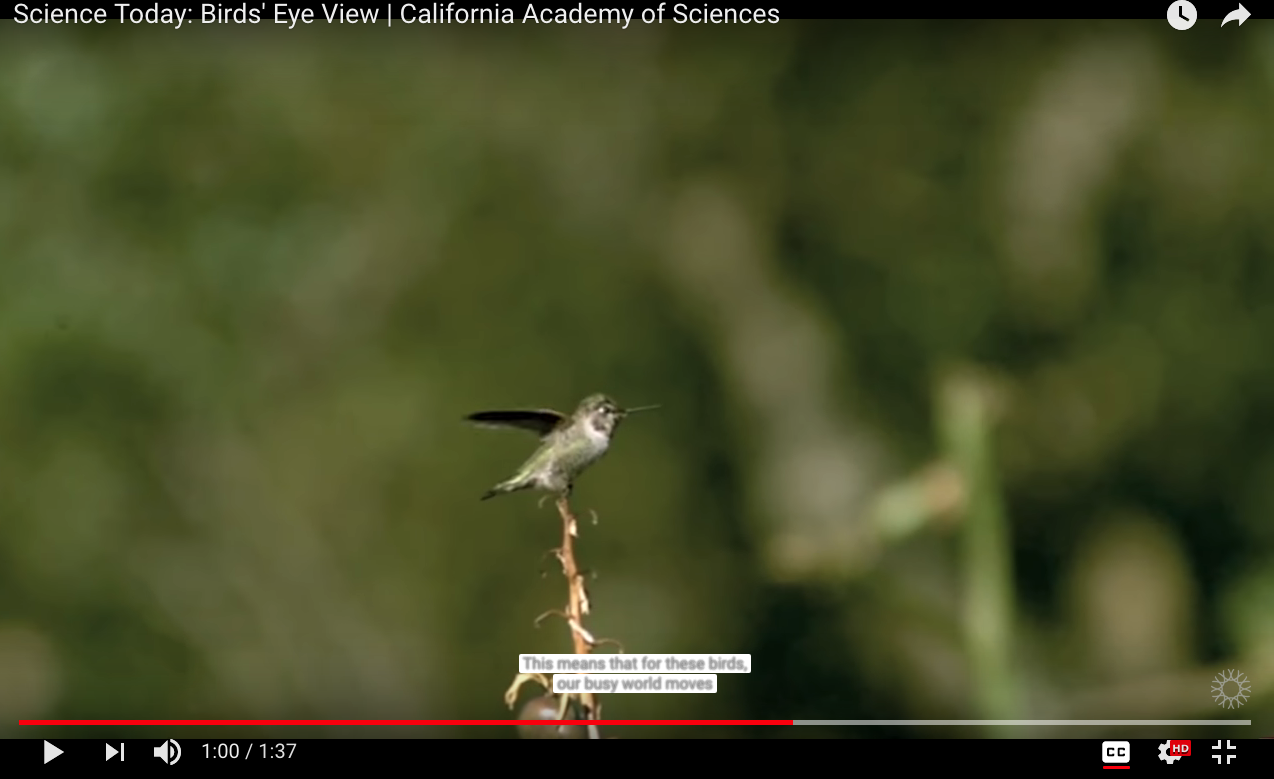
A video from California Academy of Sciences, subtitled to 18 languages by their volunteers on Amara

These videos make learning fun, interactive, and visually appealing. This can be helpful, not only for visual learners, but also for students who struggle to focus and need quick, entertaining teaching methods to keep their minds fully engaged and processing the information. Of course, it has the added bonus of increasing access to educational resources for deaf and hard of hearing learners. It is only right that deaf or hard of hearing students get the same access to these new educational tools as their hearing peers.


It is our job, as socially conscious members of society, to be aware and take action when not everyone’s needs are being taken into consideration.


Join the Movement to Make More Content Accessible

We need each and everyone of you to help make content accessible to everyone. Here are a few ways to get involved:

  1. When you spot a video without captions or subtitles, contact the creators of the video.
  2. Help subtitle videos using Amara.
  3. Volunteer to subtitle with organizations like TED Talks and Udacity.


Read these articles next

Accessibility and Captioning

Post navigation

Previous Post: Getting involved with Amara On Demand and Enterprise just got easier!
Next Post: New in the Amara Subtitle Editor: Split Subtitles

More articles to learn from

Graphic with the headline “One Language, Many Voices: Why English Captions Still Need Localization,” alongside the Amara logo. On the right, a simple illustration shows two people communicating—one speaking and another listening—with a stylized speech bubble between them. One Language, Many Voices: Why English Captions Still Need Localization Accessibility and Captioning
Title text: “Is your Campus Website ADA Compliant? Here's What Colleges and Universities Must Do Before April 24, 2026.” On the right, a stylized illustration of a laptop displaying a web browser with “WWW” in the search bar. A magnifying glass and cursor icon hover over the search field, suggesting website inspection or accessibility review. The Amara logo appears in the bottom left corner. Is your Campus Website ADA Compliant? Accessibility and Captioning
On the left, a cartoon woman with short dark hair wears a yellow cardigan and holds a red-and-white megaphone while pointing to the right. Large white text on the right reads: “SDH Subtitles and Captions: Expanding Accessibility for Everyone, Everywhere!” The Amara logo appears in the lower right corner. SDH Subtitles and Captions: Expanding Accessibility for Everyone, Everywhere Accessibility and Captioning
Illustration with the Amara logo at the top. On the left, two women sit at desks facing each other, working on laptops and a desktop computer, with a plant and office items nearby. On the right, large text on a dark purple background reads: “Best Practices for Subtitle Translation: Why Your Template Matters (Expert Guide)”. Best Practices for Subtitle Translation: Why Your Template Matters (Expert Guide) Accessibility and Captioning
Graphic with a purple header reading “International Mother Language Day.” On the right, large text asks, “How Can Captions and Subtitles Support Linguistic Diversity?” On the left, an illustration shows three diverse people smiling and talking together. Two speech bubbles above them contain a Chinese character and the letter “A.” The Amara logo appears in the bottom right corner. International Mother Language Day: How Can Captions and Subtitles Support Linguistic Diversity? Accessibility and Captioning
Graphic with the title of the article in Brazilian Portuguese at the top-center, the title reads: A Importância das Legendas na Educação e na Acessibilidade. Below the text, an illustration shows two students studying at separate desks: one wearing headphones and typing on a laptop with an open book, and another writing on a tablet beside books and a cup. A Importância das Legendas na Educação e na Acessibilidade Accessibility and Captioning

Comments (4) on “The Importance of Subtitling: Accessibility for All”

  1. Pingback: 11 Free Tools to Make Your Captioning Process Easier in 2018! – Amara Subtitling Blog
  2. Robbie Bex says:
    September 24, 2018 at 3:55 pm

    we have apps that seems like for just about anything but when I try to send a video to a friend of mine that is deaf he can’t hear it there’s got to be some way that we can put closed captioning just had to add it to a video not already have it in it so everybody has to look at it but to be able to add an app to do something to that video to make it closed captioning they shouldn’t be left out they’re people just like us and it’s not fair it’s just seems like a money-making Market it’s all anybody wants to do nowadays is to make money on anything they can stop charging and include the deaf people for free they deserve it

    Reply
  3. Pingback: How To Choose Closed Captioning and Subtitling Service Companies in 2021 - Amara.org
  4. Pingback: Overcoming Cultural Barriers: The Magic of Subtitling and Translation - Amara.org

Leave a Reply Cancel reply

Your email address will not be published. Required fields are marked *

Give us a follow:

  • Bluesky
  • Facebook
  • Instagram
  • LinkedIn
  • YouTube

Contact us at enterprise@amara.org

Powered by PressBook Grid Blogs theme