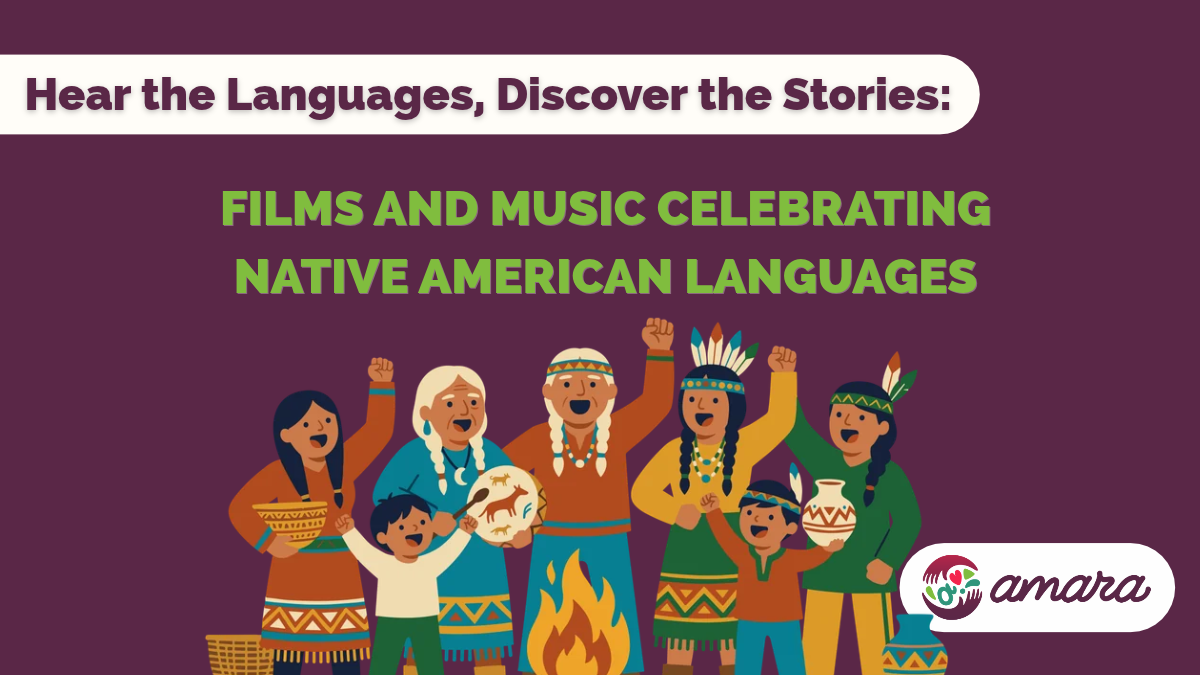
This Native American Heritage Month, explore Indigenous languages through films, documentaries, short videos, and music—and discover the voices, stories, and cultural knowledge they carry.
Language is more than a way to communicate. It holds memories, traditions, humor, relationships, and ways of understanding the world. For Native American communities, Indigenous languages are an essential part of cultural identity and a connection between generations.
One meaningful way to appreciate this linguistic heritage is through audiovisual media. Films, interviews, music videos, and documentaries allow us to hear languages in context, experience different storytelling traditions, and learn directly from Indigenous filmmakers, artists, elders, and language advocates.
Whether you are a language learner, educator, filmmaker, or simply curious about Native American cultures, these resources offer a starting point for discovering the diversity of Indigenous voices.
Films and Videos to Add to Your Watchlist
Here are several films and collections that explore Indigenous languages, cultural knowledge, and language revitalization. Some feature Indigenous languages directly, while others focus on the people and initiatives working to keep them alive.
1. Language Is Life — PBS’s Native America
Format: Documentary episode
Explore the power of Native languages and meet people working to preserve and revitalize them. This episode of Native America examines efforts to keep Indigenous languages alive, including innovative uses of technology and films dubbed into Navajo.
It is an excellent introduction to the relationship between language, identity, and cultural continuity.
Watch: PBS — Native America
2. Oyate Woyaka — The Lakota Language Story
Format: Documentary, approximately 56 minutes
This documentary explores the history of the Lakota language, the forces that threatened its survival, and the community efforts working to revitalize it. It also highlights the language’s spiritual and cultural significance and the challenges of passing it on to future generations.
For viewers interested in how language revitalization works in practice, this film offers an especially valuable perspective.
Watch: PBS — Oyate Woyaka
3. Who Speaks Wukchumni?
Format: Short documentary
This short film tells the story of Marie Wilcox, a Wukchumni speaker who devoted years to documenting her language and creating a dictionary. Her work illustrates how individual commitment, community knowledge, and documentation can help preserve a language for future learners.
It is a powerful reminder that recording words and expressions can create resources that outlast a single generation.
Explore: Who Speaks Wukchumni?
4. ᎤᏕᏲᏅ (What They’ve Been Taught)
Format: Short film, approximately 9 minutes
Created by Cherokee filmmaker Brit Hensel in collaboration with Keli Gonzales, this film explores reciprocity, tradition, land, and cultural knowledge through a story told by an elder and first-language speaker.
The film offers an opportunity to engage with Cherokee perspectives and the connections between language, community, and the natural world.
Watch: ᎤᏕᏲᏅ (What They’ve Been Taught) | Reciprocity Project
5. Tentsítewahkwe
Format: Short film, approximately 17 minutes
Directed by Mohawk filmmaker Katsitsionni Fox, this film follows Jessica Shenandoah as she reconnects with land-based knowledge with the guidance of knowledge keepers. The story explores traditional practices such as food gathering, pottery, medicine making, and mat weaving.
The film features both English and Mohawk, with English subtitles, making it a useful example of how subtitles can help audiences engage with Indigenous-language storytelling.
Explore: Tentsítewahkwe – Trailer
6. Stories from the River: Language
Format: Documentary short
This educational video brings together Native individuals from several communities in the Columbia River region to discuss the importance of language in cultural preservation. Contributors reflect on the relationship between language, identity, and the continuation of community traditions.
It is particularly useful for educators and anyone interested in understanding language revitalization through the voices of Indigenous people themselves.
Watch: Confluence Project — Stories from the River: Language
Explore More Indigenous Films, Animation, and Music
Your viewing journey does not need to end with these six recommendations. The following collections offer additional opportunities to discover Indigenous languages and the creativity of Indigenous storytellers.
- Smithsonian Mother Tongue Media: Explore Mother Tongue Media, a collection featuring Indigenous-language animation, short films, and music videos. Its resources offer a window into diverse languages and creative traditions across the world.
- Mother Tongue Film Festival: Discover films celebrating linguistic diversity through the Smithsonian’s Mother Tongue resources. Look for stories made by Indigenous filmmakers and check the festival’s current program for screening opportunities.
- American Indian Film Gallery: Browse the American Indian Film Gathering. Explore American Indian stories from inside and outside communities in films—spanning lands, languages, and lifeways.
- Documentary Educational Resources: Visit the Indigenous Film Index: North America to discover films associated with a wide range of Indigenous communities and languages.
As you explore, look for music videos and performances in Indigenous languages, too. Songs can be powerful language-learning resources because melody, rhythm, repetition, and emotion help listeners engage with words and expressions. They can also introduce audiences to contemporary Indigenous artists who are carrying their languages into new creative spaces.
Watch With Curiosity—and Listen With Respect
As you explore these resources, remember that Native American languages are not one language or one shared cultural tradition. They represent many distinct communities, histories, and linguistic systems. Whenever possible, prioritize work created by Indigenous filmmakers, artists, educators, and community organizations, and follow the viewing and sharing guidance they provide.
Consider watching with captions or subtitles when available. Captions can help you connect spoken words with written forms, while translations can help you understand the meaning without losing the opportunity to hear the original language. If you are using a video for language learning, replaying short passages and following along with a transcript can support listening comprehension and vocabulary development.
For educators, libraries, and cultural organizations, these videos can also serve as starting points for discussions about linguistic diversity, cultural preservation, and the role of media in keeping knowledge accessible.
Help Keep Indigenous Voices Accessible for Future Generations
Audiovisual archives preserve much more than images and sound. They can safeguard oral histories, songs, lessons, interviews, and the voices of fluent speakers—resources that may become invaluable to future generations of language learners.
At Amara.org, we believe that captions, transcription, and subtitle translation can help make these resources more accessible, searchable, and useful for education and cultural preservation. We invite organizations working with Native American communities, Indigenous languages, and cultural heritage to contact us to explore solutions that support their goals.
This Native American Heritage Month, take time to watch, listen, and learn. Every story offers an opportunity to appreciate the richness of Indigenous languages and the people working to ensure they continue to thrive.
Want to make your cultural or language archives more accessible?
Contact Amara.org at client-services@amara.org to learn more about our captioning, transcription, and subtitle services.